


When Attendance Targets Trump Inclusion: The Unseen Impact on SEN Families.

When Attendance Becomes More Important Than Access
On 12 November 2025, the Education Secretary announced a new “Roadmap to Improve Attendance Levels” — a sweeping national plan to drive up school attendance and “restore absence to pre-pandemic levels.”
On paper, it sounds positive: getting children re-engaged with education, providing breakfast clubs, mentoring, and data-driven support.But for families like ours — parents of children with special educational needs (SEN) — the reality is far more complicated.
Money is being poured into systems designed to force attendance, not to fund support.AI-generated school targets, attendance monitoring hubs, and tougher fines for families are being prioritised — while children like our daughter Penny are being left behind by a system that still doesn’t meet their most basic health and safety needs.
The Roadmap in Brief
This new policy gives every school in England a data-driven, AI-generated attendance improvement target.
Each school will be judged on how well it meets its minimum attendance figure.
“Attendance and Behaviour Hubs” will be rolled out to share strategies, and mentoring programmes expanded to tackle persistent absence.
In theory, this is about helping children re-engage with learning. In practice, it puts enormous pressure on schools to meet government metrics — even when individual pupils’ needs don’t fit the model.
And for children with complex health or learning conditions, that can mean being treated as a statistic rather than a student.
The Unknowns for SEN Families
For parents of children with SEN, the roadmap raises far more questions than answers:
How will these AI systems interpret medical absences or long-term conditions?
Will schools still have flexibility to approve part-time timetables or therapeutic adjustments without penalty?
How will local authorities treat children whose attendance is disrupted by health or care issues?
What happens to families already waiting years for EHCP tribunals or appeals — will they be caught in the enforcement net before support is even in place?
These unknowns matter. Because behind every “attendance figure” is a child — and many of those children are vulnerable.
Penny’s Story: A System That Calls It
“Non-Attendance”
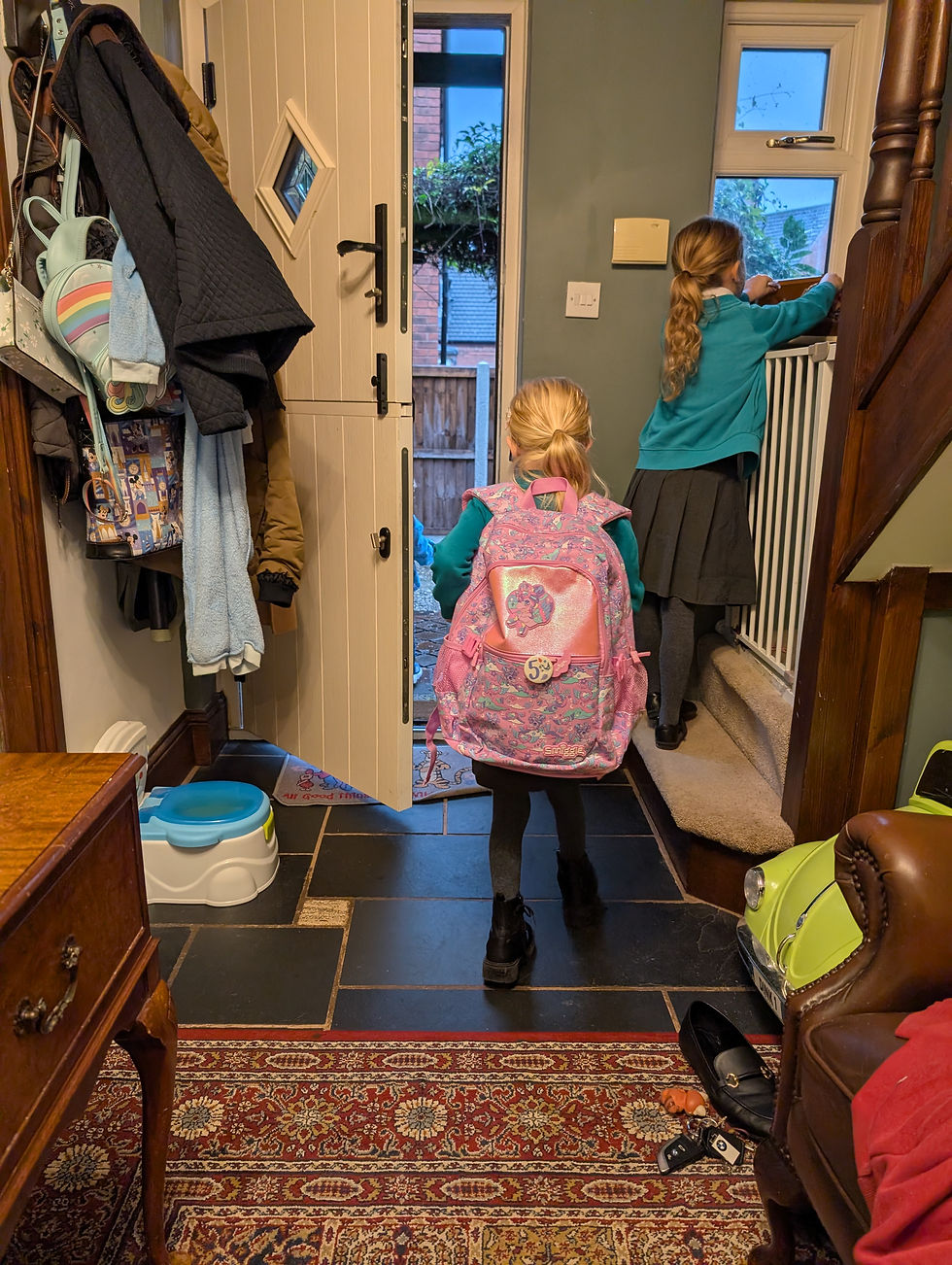
Our daughter Penny has several conditions (cerebral palsy, right hemiplegia, autism, severe sleep apnoea and bladder and bowel problems) but perhaps the easiest illustration and our biggest concern right now is her uncontrolled epilepsy. Her seizures are unpredictable and dangerous, and her current Education, Health and Care Plan (EHCP) makes no provision at all for her epilepsy, despite repeated attempts to have this addressed.
We are currently appealing the plan on a number of points at the tribunal, but the hearing date was listed this week, and isn’t until January 2027 — more than a year away. In that time, her condition will likely evolve, and in relation to her epilepsy alone, we face the very real prospect of brain surgery in the background, and that’s without considering the ever evolving impact of her other conditions.
Right now, the only reason she can safely attend school full time is because of the temporary supply support the school has put in place — a measure that could be withdrawn at any time. If that happens, Penny can no longer attend school safely.
And under this new roadmap, our family could be counted among those “failing to attend.”
How can that be right? How can a system that claims to promote inclusion simultaneously punish the very children it refuses to properly support?
The Risk: Turning Schools Into Enforcers
The roadmap’s design creates a dangerous new pressure point for schools. By tying success to attendance targets, it risks turning schools into enforcers rather than educators — a role no teacher or head wants, but one they may have no choice but to adopt.
This could lead to:
Inconsistent enforcement between schools, depending on leadership and resources.
Over-zealous application of attendance penalties, where headteachers feel compelled to prove compliance with national figures.
Families like ours having to fight, yet again, for Penny to be recognised as an exception to the rule — another exhausting battle in a system that already makes everything a fight.
When attendance becomes a target rather than a tool, children stop being seen as individuals .And for those with SEN, that can have real consequences — educationally, emotionally, and even physically.
The Funding Question: Priorities Upside-Down
It’s difficult not to see the imbalance in priorities. We’re told there isn’t enough funding for specialist staff, therapy services, or appropriate health provision. Yet there is money for:
AI systems to monitor attendance
“Attendance and Behaviour Hubs”
Expanded enforcement and fine frameworks
National databases to track absence
If even a fraction of those funds were redirected into provision and safety, children like Penny could attend school with confidence and dignity. Instead, we have a policy that measures compliance instead of care — and mistakes presence for progress.
Attendance ≠ Education
Being in school isn’t the same as being educated. For Penny, whose seizures are uncontrolled, attendance without safety is meaningless.
Her right to education depends on being able to attend — safely, supported, and with understanding. Counting her presence on a register doesn’t make her any safer or any closer to learning.
What Parents Are Asking For
We’re not asking for leniency. We’re asking for logic. For compassion. For policies built around children, not just numbers.
What we need:
Schools equipped and funded to meet complex medical and additional needs
EHCPs that are accurate, timely, and enforceable
Tribunal waiting times that don’t stretch into years
Flexibility in attendance expectations where health or disability demands it
Investment in support, not surveillance
Until that happens, the government’s “attendance drive” will continue to punish the very families who are trying their hardest just to keep their children safe and learning.
Final Thought
If the Department for Education truly wants to improve attendance, it must start by ensuring that every child can safely attend. Because attendance targets mean nothing if the classroom itself isn’t a safe or accessible place to be.
Right now, it feels like the government is spending more on AI to fine parents for a two-week holiday in Florida than on ensuring that children like Penny have the human support they need to simply be in school.
Attendance without access isn’t education. It’s exclusion — dressed up as progress.
For Penny, and for every child like her — when will the system start showing up, instead of just counting heads.

Comments